

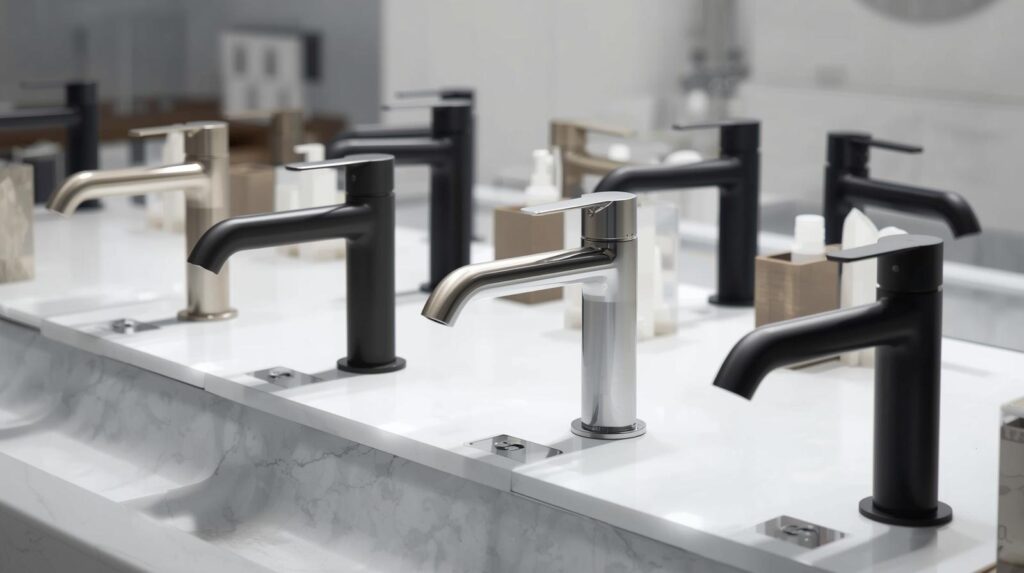
Selecting the right faucet is crucial for both functionality and style in kitchens and bathrooms. Faucets come in a variety of types, each designed to suit different needs, aesthetics, and plumbing setups. This guide will help you navigate the most popular faucet types and their ideal applications.
Single Handle Faucets
Single handle faucets feature one lever controlling both water temperature and flow. Their sleek, minimal design saves space and is easy to operate, making them popular for modern bathrooms and kitchens. These faucets often come in pillar or mixer styles.
Double Handle Faucets
Double handle faucets have separate knobs for hot and cold water, allowing precise temperature control. They suit classic or traditional designs and provide reliable, adjustable water flow, commonly seen in both bathroom and kitchen setups.
Touchless (Sensor) Faucets
Touchless faucets operate via motion sensors that turn water on or off when hands approach. These faucets improve hygiene and minimize water waste, suitable for contemporary homes, commercial spaces, and anyone seeking hands-free convenience.
Pull-Out and Pull-Down Faucets
Pull-out faucets have a spray head that extends for versatile cleaning and filling. Pull-down faucets feature a high arc and adjustable hose, ideal for larger sinks requiring reach and flexibility. Both enhance kitchen functionality with spray and stream modes.
Wall-Mounted Faucets
Mounted on the wall instead of the sink or countertop, wall-mounted faucets free counter space and allow innovative designs. They are popular with vessel sinks and freestanding tubs but require dedicated plumbing installation.
Vessel Sink Faucets
Designed for above-counter vessel sinks, these tall faucets provide necessary clearance and make a bold design statement. They often feature single handles and waterfall spouts, enhancing modern bathroom aesthetics.
Ball, Disc, and Cartridge Faucets
– **Ball Faucets:** Single handle faucets with a rotating ball mechanism controlling flow and temperature. Though common, they may need more maintenance due to their mechanical parts.
– **Disc Faucets:** Use ceramic discs for smooth, durable performance with minimal leaks. These are long-lasting and require less repair.
– **Cartridge Faucets:** Available as single or double handle faucets, they use cartridges to regulate flow. Easier to repair and maintain, these faucets combine convenience with longevity.
Specialty Faucets
Other varieties include pot fillers (wall-mounted near stoves), bridge faucets connecting handles and spouts, high-arc or low-arc styles, and swiveling faucets for enhanced sink coverage. Mouth-operated faucets serve medical or laboratory needs by allowing hands-free activation.
FAQs About Faucets
Q: What is the most popular faucet type?
A: Single handle and double handle faucets dominate due to their balance of usability and design adaptability.
Q: Are touchless faucets water-efficient?
A: Yes, their sensor operation limits water flow to necessary use, promoting conservation.
Q: How do I pick the right faucet for a vessel sink?
A: Choose a tall faucet designed for vessel sinks to ensure adequate clearance and aesthetic harmony.
Q: What causes faucet leaks at the base?
A: Leaking at the base is often due to worn O-rings or gaskets that should be replaced.
Q: When should I replace faucet parts?
A: Check components like cartridges and washers every 3-5 years, replacing as needed to avoid leaks.
Q: Is faucet installation DIY-friendly?
A: Basic faucet installations are manageable with standard tools, but complex or wall-mounted faucets might require professional plumbing help.
Q: Why does my faucet handle feel stiff?
A: Mineral deposits or worn parts can cause stiffness; cleaning or replacement is the solution.
Q: How to fix low water pressure in faucets?
A: Clearing clogged aerators or pipes often restores proper water flow.
Q: Which is better for kitchens, pull-out or pull-down faucets?
A: Pull-out faucets suit compact sinks, while pull-down faucets offer more reach and flexibility in larger kitchens.
Q: How to avoid leaks when installing a faucet?
A: Ensure all connections are tight, use proper sealing materials, and test thoroughly after installation.